Reflections from Ikara- Flinders Ranges

Reflections from Ikara- Flinders Ranges


Who is Jesus?  This is question I have been asking myself for some time.  On the one hand, this seems like a pretty basic question for an Anglican Priest to be asking. On the other hand, as a foundational question, it seems important that I continue to ask this question. This question has broadened in complexity for me through conversation with Adnyamathanha people. As I have listened to the land and the people speak, I have been challenged as to who Jesus is. Granted, Jesus himself is said to have asked, “Who do you say I am?” but I am no longer clear who he was speaking to. More importantly, the context he was speaking in no longer seems relevant to me, nor the First Nations people of this land currently called Australia. I am, therefore, left with an ethical dilemma. As a priest in the Anglican church how is my ministry formed such that it is relevant, appropriate and contextual?

It seems to me that this is the sticking point for all inter faith and ecumenical work. Although it would appear that there should be a variety of ways to respond to this question very few are deemed acceptable in the European version of Christianity brought to Australia by colonizers and their missionaries. In my observation, the problems and conflicts between faiths and denominations arise from a faith that is founded exclusively on the Bible. These thoughts were stimulated by several fireside chats, including with Grania and David.  There is a deep irony in this as the question is asked of and by purportedly the most relational figure in religious history and yet the narrow set of approved responses leave a legacy of conflict and confrontation.

Certainly, when a person of European, Christian Heritage responds to this question the acceptable response is formulaic: The Son of God, the Saviour, the Messiah, the Crucified one, The Way, the Truth and the Life. These responses are founded in the Bible which is deemed to be the inspired word of God. The work of colonial missionaries was to inculcate Aboriginal people into this exclusive manifestation of Christ. This work was completed in a wholly Euro-centric way with Salvation and Civilization being synonymous. Missionary zeal manifested in control of resources, forcing Aboriginal people to resist their own language, cultural practices, even family, to receive basic food, clothing and accommodation, distributed at the whim of mission managers and local, western, employers.  This is the essence of the life experienced by Aunty Denise, Uncle Alan, and Kristian and their forbears that I heard this weekend.

It is apparent that there is a failure of ethics in this practice of recent history. In light of this, combined with my personal experience of God, religion, and knowledge, I find myself holding on to deep resentments:

  1. The discrediting of a form of religious experience that speaks clearly to me.

  2. The imposition of a singular form of knowledge and understanding at the exclusion of all other experiences of life and the world.

European Christianity has deconstructed faith, itemizing even the elements of the Godhead, formulating a ‘correct’ passage to God, instigating a hierarchy in worship, and separating the spiritual from the ecclesial. Colonization has spread a singular form of knowledge and understanding that has led to minimization of curiosity, the generation of fear of the unknown or unknowable, and instigating a stranglehold over teaching and learning. Conversely, the interrelated, interactive, relational, reciprocal form of life described and shared by Aunty Denise, whereby connection with Country, culture, language, and knowledge are prioritized and celebrated, represents a form of reconstructed faith, culture, and spirituality. Responsibility and reciprocity offer access to the creator spirit. Eons of survival, flourishing, continuity, offer reassurance that although the future can never be known, it can be adapted to, accommodated, and secured.

This resentment is represented by my poem

‘PO@MO’
(pissed off at missing out)

I am so very pissed off.
I am angry, anxious, and awestruck at the temerity of strangers
Who rocked up, stormed through the door, and sat down, uninvited, at table.
What of courtesy?
Manners,
Gentlemanliness,
All those elements attributed to a Man Of Good Breading?

How can it be that no one could see?
Who determined that white was right?
I am so very pissed off.

A simple pause.
An act of integrity,
A chance to absorb all that was before them.
The humility to see, to say, to know
That there was lots to know.

I am so very sad.
‘What could have beens’ are fruitless,
But, what could have been if ?
Rather than a new settlement full of
Fear and anger
War and destruction
Ecological disaster and terms of torture
What could have been?,

An expanded settlement
Collaboration, community
Relationship and reciprocity
Harmony and enhancement.

What could have been indeed,
If termination were treaty
Ignorance was curiosity
Genocide was getting on.

I am so pissed off that
Through fear and ignorance,
we are all missing out
On what could have been.

And then I paused. I can remain Pissed Off at Missing Out  as long as I like. I can allow anger and frustration to dominate. Or I can take the lessons of Aunty Denise, Uncle Allen, and Kristian and get on with getting on. What could have beens are, indeed, pointless.  I have a responsibility now to ensure that this awareness that I have been gifted by Aunty Denise, Kristian, and Uncle Allen is shared, has the chance to grow. I have a responsibility to reciprocate their courage, perseverance, and determination and to stand in the uncomfortable spaces where “nobody wants to know”, the spaces that would cause discomfort for those in denial, the space where I might offend both First Nations people and the people of the colonizers.

Final thoughts,

And just who is Jesus?

And so it seems
my weekend thoughts are gathered.
How lucky we all are to have me with all the answers,
It’s easy say I,
Just change EVERYTHING and all will be well,
And all will be well.

And yet,
God may work outside of time and space
enjoying God’s own perichoretical dance,
but, sadly we do not.
What has been done is done,
What needs undoing needs undoing.
Change must come.
And it will,
Whether it be storming, or dancing,
Or slipping quietly in
Will soon be seen.  

In the meantime,
We ponder on,
Just who is Jesus?
Who do you say that I am?

It cannot be that Jesus is the stumbling block,
We know that Jesus is the cornerstone.
We are told that Jesus is the way, the truth, and the life.

And yet,
Just who are we told by?
The gospels report that these are Christ’s own words.
Whose Gospel Truth?
It seems a long bow to draw,
But can it be
That all we know, all we are taught, all that we study
Is Jesus the Christ in pieces?
God broken into tiny pieces to fit into the box we made for Him.

The Adnyamathanha tell us, Yarta Wandatha
The land is speaking,
God is speaking.
Are the people listening?

Who is the Christ?
Christ is Country,
God is Country,
The Spirit is Country
Tied together by moiety,
Strung with Songlines,
Held together by God’s own people
Who refuse to hand over language, land and culture to a God who needs a ship.

Training for Ordained Ministry

Introducing the New Team

by +Denise Ferguson

It has been a significant year of change and transition for those in Ordained Ministry Formation, and the Ministry Discernment Team as a whole. Following extensive reflection and conversation a new Team has been formed under the banner of Clergy Development, Training and Wellbeing. This Team, led by The Rev’d Michael Stalley, Director, brings together Vocational Exploration (the Rev’d Chris Bate) Ministry Enquiry and Formal Ministry Discernment (The Rev’d Michael Stalley), Formation for Ordained Ministry & Newly Ordained Clergy (The Right Rev’d Denise Ferguson), Wellbeing and Professional Development (Rebecca McLean) & Field Education (Vacant).

This team offers a comprehensive approach to ministry formation from initial exploration through until retirement – because formation never ends.

Watch this space as developments unfold.

Responding to the Call

Training for Ordained Ministry is a significant commitment, often emerging after an intense journey of reflection. Those who respond to a potential call are examined and tested, commit time, talents, and courage to step into what is an uncertain future. This can take several years. However, the call to be faithful to the Gospel, to spread the Good News and grow God’s kingdom amongst all of God’s people is the stimulus that keeps the call alive.

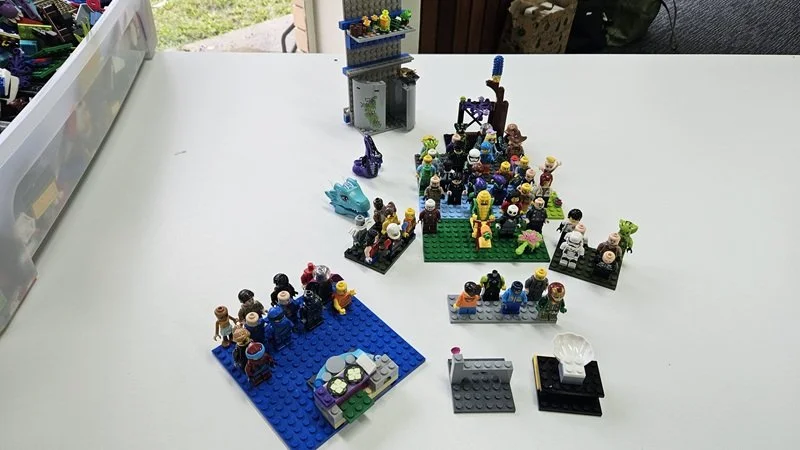
A creative depiction of the church in LEGO.

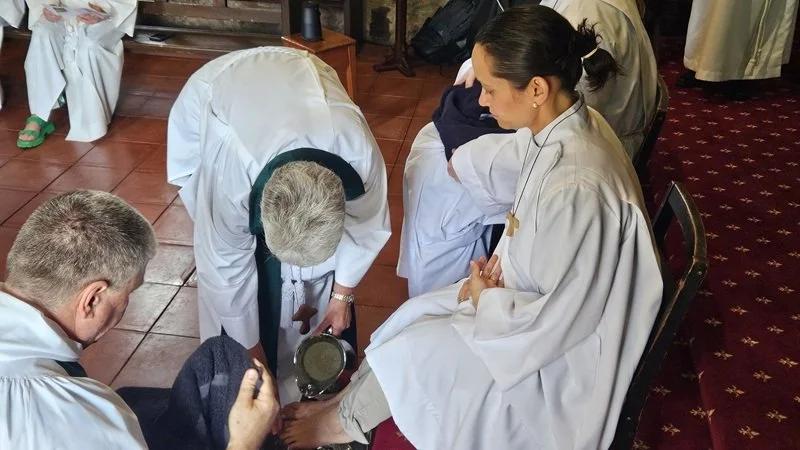
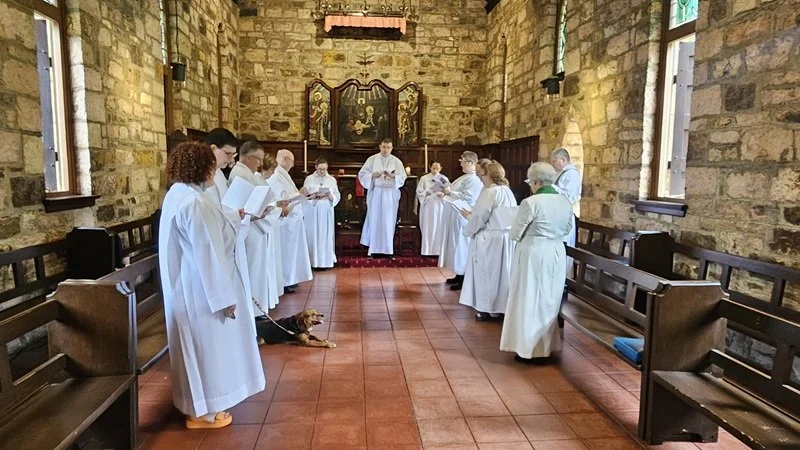
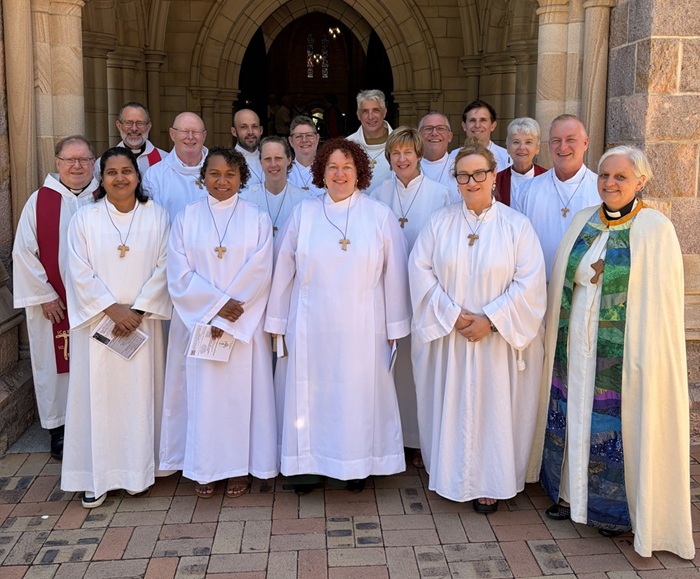
Ordination students at their final service for 2025

The face of ministry has changed dramatically in the past decade, and this calls for diverse skills. Therefore, the training requirements are complex. Students juggle family, work, training, and study requirements. This is a considerable commitment. Please pray for them.

Ordination students at their final service for 2025

Eleven students completed the 2025 Formation Program. Four people were ordained Deacon at the recent Diocesan Ordinations.

Ordination students gathered at St John’s Cathedral

Looking Ahead to 2026

In 2026 there will be fifteen students participating in the formation program for ordained ministry (renamed Grow from 2026), and thirteen clergy in the formation for the first three years. (renamed Emerge from 2026)

Inside the Grow Program

There are four components to Grow: Ordained Ministry Formation Program.

  • The Formation Intensive Program comprises six three-day training weekends, and a three-day silent Retreat, as well as attendance at various Diocesan services and Synod. The aim is to equip students with the leadership skills to serve in diverse and often complex ministry situations.

  • The practical outworking of these skills happens in Field Education placements, which may be in parishes or chaplaincies across the diocese. Students commit to 200 hours a year, in addition to Sundays, to grow their practical skills, guided by an experienced Training Incumbent. We are very grateful for the investment Training Incumbents, and Presenters commit to supporting and enabling this training.

  • Alongside the Formation program sits the Academic Program provided by St Francis College. While there are Archbishop’s Academic requirements that must be completed, there is also scope for additional study. Depending on previous tertiary study, this may be at an undergraduate or graduate level. The Team at St Francis College guides students as to best options and ably supports them throughout their study.

  • This entire period of Formation is undergirded by Personal Development, prayer, theological reflection, personal spiritual development, growth in self-awareness and emotional intelligence.

Please pray for all who are exploring a call to ministry – Lay or Ordained.

If you want to know more, contact the Director of Clergy Development, Training and Wellbeing michael.stalley@anglicanchurchsq.org.au

Societas Liturgica Report

Societas Liturgica Report

This year I had the privilege of attending the 2025 Societas Liturgica Congress in Paris, a global gathering of liturgical scholars, church leaders, and practitioners. The theme, The Liturgical Assembly in its Spaces, invited deep reflection on how worship spaces shape and are shaped by the communities that inhabit them…

….I presented a paper entitled A Round Church in a Square Hole: Indigenous Theologies and the Challenge of Decolonising Liturgical Space. Drawing on Aboriginal theologies, I argued that decolonisation requires more than symbolic gestures. It demands structural changes to how worship spaces are conceived, built, and used.

Winter Shelter Toowoomba 2025

Winter Shelter Toowoomba 2025

Winter in Toowoomba can be very cold. Not only do the temperatures drop but we get a bitter cold wind blowing across the top of the mountain in which the city sits. In 2020 a group of churches were asked be part of a project that would welcome some of our homeless into our church spaces to sleep during the cold winter months. Winter Shelter Toowoomba is an affiliate of Stable One

Studying Reading Trauma in the Book of Jeremiah

Studying Reading Trauma in the Book of Jeremiah

The Book of Jeremiah, often seen as dense and difficult, comes alive in this subject as a deeply human and emotionally rich response to trauma…

Explore New Units in Semester 2

Explore New Units in Semester 2

As we approach Semester 2, we are pleased to introduce thought-provoking subjects that promise to expand your understanding and challenge your perspectives. These units delve into historical, theological, and cultural studies, offering unique insights and fostering a deeper appreciation of the world around us.

Sundays in Year C

Sundays in Year C

Intergenerational Worship Resources support Sunday worship based on lectionary readings. MediaCom's L3, launched in late 2020, offers quarterly materials for congregations. Despite no new editions of Whole People of God and Seasons of the Spirit since 2023, previous Year C resources can be adapted for 2025. Living Stones by Susan Sayers remains valuable for children's activities. Free online resources also enhance children's participation in worship. assistant Intergenerational Worship Resources support Sunday worship based on lectionary readings. MediaCom's L3, launched in late 2020, offers quarterly materials for congregations. Despite no new editions of Whole People of God and Seasons of the Spirit since 2023, previous Year C resources can be adapted for 2025. Living Stones by Susan Sayers remains valuable for children's activities. Free online resources also enhance children's participation in worship.